
That Doesn’t Mean What You Think It Means
A GEF Civic Essay on “Forever War,” Its Costs, and the Meaning of Victory
March 10, 2026
By Dr. Mya Fisher
Note: This essay accompanies a short Global Equity Forward civic visual series on INSTAGRAM examining how we understand conflict—specifically the meaning of “forever war,” the costs of prolonged conflict, and what it actually means to win a war.
Since the most recent military campaign against Iran, the phrase “forever war” has resurfaced repeatedly in public debate. This term arises whenever there is anxiety that a conflict may escalate and stretch beyond its expected timeline. Yet despite how frequently it is used, the phrase is rarely defined or examined by either its defenders or critics.
There are those who dismiss the concept entirely, arguing that it applies only to the actions or miscalculations of leaders in specific historical moments. Others deploy it rhetorically as a criticism of foreign policy decisions. As a result, the phrase often functions more as a label than an explanation. Over time, the label itself has begun to lose its shared meaning.
This lack of clarity and shared meaning matters. When the meaning of a “forever war” remains vague, the costs of prolonged conflict become easier to overlook and the meaning of victory becomes harder to define. Understanding conflict therefore requires examining three related questions: what we mean when we say “forever war,” what prolonged wars actually cost, and what it really means to win them. If the phrase is going to remain part of our civic vocabulary, we should use it with greater precision. Only then can citizens hold leaders accountable not just for the wars they start, but for the political outcomes those wars produce – intentionally or unintentionally.
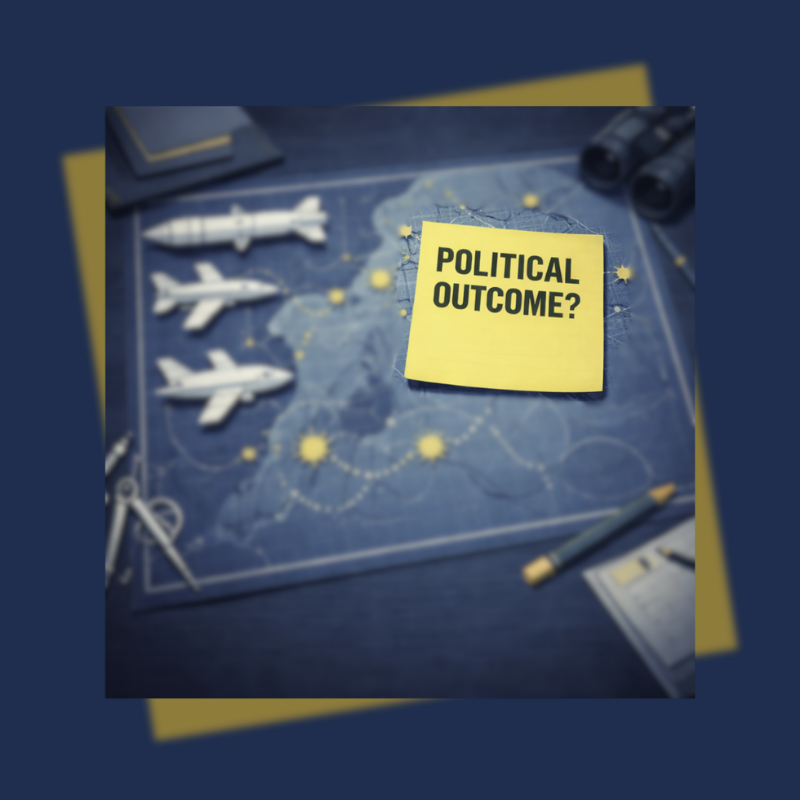
Examining the Definition of "Forever War"
A war does not become “forever” simply because it lasts a long time. Some conflicts extend because circumstances evolve in ways that were not anticipated at the outset. Military successes can expand the mission. Alliances can shift. Regional dynamics can change. In other cases, conflicts continue because leaders failed to define a credible political plan for what happens once the fighting stops. They don’t have a clear end result. Therefore, there is no end. These dynamics are not identical, but they share a common feature: the original plan proves insufficient to the reality of the conflict.
One way wars extend beyond their initial scope is through mission expansion. Military success can create pressure to pursue additional objectives that were not part of the original plan. A campaign intended to eliminate a specific threat may gradually expand into efforts to reshape political institutions, stabilize a region, or remove an unfriendly regime. Each new objective introduces additional political complexities that were not part of the initial military calculus.
For many Americans, we do not need to look far for examples. The pattern is visible in the United States’ military involvement in the Middle East—from the first Gulf War in the early 1990s to the wars in Iraq and Afghanistan following the attacks of September 11, 2001. The original justification for the 2003 invasion of Iraq was the search for weapons of mass destruction that ultimately did not exist. When that explanation collapsed, the objective shifted toward removing Saddam Hussein. Meanwhile in Afghanistan, the pursuit of Osama bin Laden expanded into a broader effort to dismantle the Taliban and reshape the country’s political institutions.
The goalposts kept moving...year after year
In the aftermath of September 11, many Americans—including myself—extended extraordinary trust to policymakers who promised that decisive military action would eliminate the threat and protect Americans at home and abroad. That trust was reinforced by a shared confidence in the power of the most technologically advanced military in the world. But military success can create its own momentum. Each operational “win” can encourage leaders to push the mission further, pursuing additional objectives that were not originally contemplated. The pursuit of successive victories can become a feedback loop, gradually expanding the scope of the conflict.
A second pathway to prolonged conflict emerges through alliances. Wars rarely involve only two sets of actors. The interconnectedness of our world means that every society has some connection or relationship with another. What matters to you, may also matter to me. The degree may differ, but the connection is there. Coalitions form to fight an adversary, partners join to leverage military assets, and regional governments may hover around the edges pursuing their own strategic priorities in the midst of a conflict. This is why treaties and military alliances like NATO exist. We are stronger when we do not go it alone. Yet while allies may share certain interests, their timelines, risk tolerances, and definitions of success are rarely identical. What one government views as a limited operation may be seen by another as an opportunity to pursue broader political goals. When those priorities diverge, there must be a plan for deciding whether continuing to pursue the interests of others with our own resources still serves our own aims. We must be honest about the possibility that such situations can evolve in ways that extend a conflict beyond the intentions of any single participant. If conflict is initiated through an alliance, all parties must be explicit about their aims and limits. Without that clarity, countries can find themselves drawn into situations where they lack primary agency. That is not good for anyone.
But the most common pathway into a “forever war” begins much earlier—during the planning phase itself.
Planning for any conflict must proceed along two tracks: the military and the political. Both are essential for execution and for determining what success is meant to look like. Military planning, you could argue, is relatively straightforward. Campaigns are often designed with extraordinary detail about how the fighting will occur. Targets are identified. Capabilities are assessed. Operational timelines are developed. Yet far less time and consideration are devoted to planning for the political conditions that are supposed to exist once the fighting stops. Bombing campaigns can destroy infrastructure and degrade an adversary’s military capacity. But bombs do not govern societies. Airpower does not administer institutions, establish political legitimacy, or determine how populations respond to external intervention. Those outcomes depend on political processes that extend well beyond the battlefield. They depend on people. Countries are societies, not targets. There must be a plan for what happens to the people who live there once the smoke clears. And for that, you need people who understand the context—the language, the culture, the history. You need expertise. You need to be thoughtful and careful. When military action begins without a clearly defined political roadmap for what happens after the fighting stops, wars can drift beyond their original scope. In that sense, a “forever war” is less about duration than about planning and preparation. It is a conflict that begins without a credible political answer to the question of what happens next.
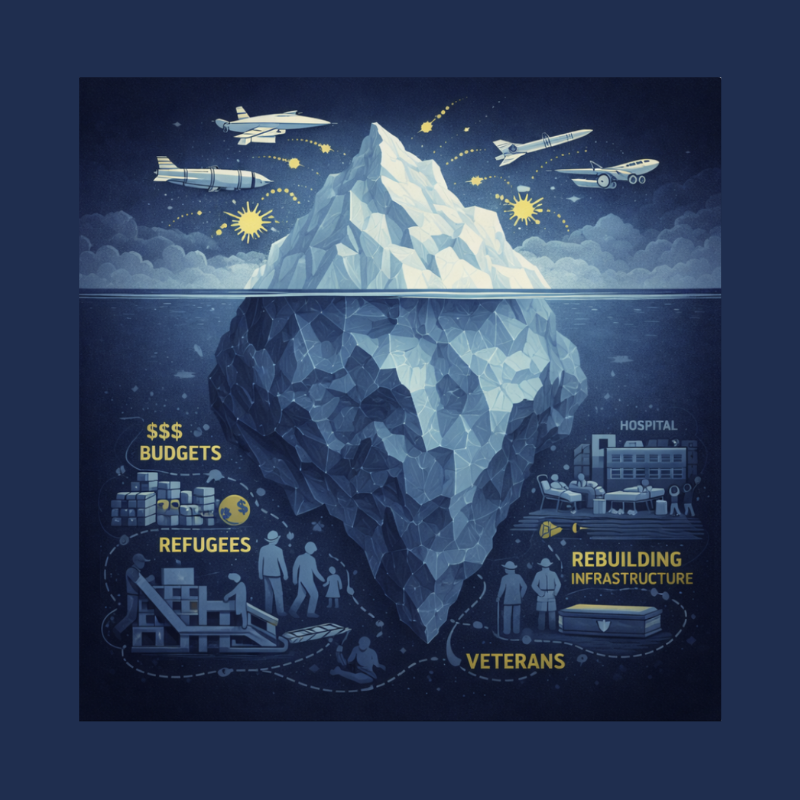 What are the costs?
When conflicts begin without a clearly defined political roadmap for how they end, the consequences rarely remain confined to the battlefield. Over time, the effects of prolonged war extend outward—into national budgets, international stability, and the everyday lives of citizens. Forever wars accumulate costs that persist long after the original military objectives have been achieved or faded from public attention.
Financially, forever wars can require enormous public resources. Specifically, taxpayer dollars. The wars in Iraq and Afghanistan, for example, are widely estimated to have cost trillions of dollars when long-term obligations—such as veterans’ care, disability support, and interest on war-related borrowing—are included. These expenditures do not disappear when combat operations slow or conclude. As a result, they reshape subsequent national budgets for decades. And some are connected to what happens to those who carried out the military operations.
Military spending during extended conflicts expands across multiple sectors. Funds flow into defense contractors, munitions production, intelligence operations, logistical networks, and the maintenance of overseas bases and equipment. These investments sustain the war effort, but they also carry opportunity costs. Every dollar committed to sustaining a prolonged conflict is a dollar that cannot be directed toward domestic priorities such as infrastructure, healthcare, education, or social programs. The financial consequences of war therefore extend well beyond the moment when the fighting stops. Governments remain responsible for the long-term care of veterans, the replacement of equipment, and the repayment of the debt incurred to finance the conflict in the first place. In other words, the financial ledger of war does not close when the battlefield quiets. Nor does the calculation of the associated human costs, which are often profound and also long-term.
War produces civilian casualties, displacement, and generational trauma within the societies where fighting occurs. Entire communities can be uprooted, creating refugee crises that reshape regional stability for years. In the immediate aftermath, hospitals become overwhelmed, infrastructure is destroyed, and social institutions—from schools to local governments—struggle to function under the strain of prolonged violence. The people of the country that did the fighting also suffer Service members and veterans carry the physical and psychological consequences of conflict long after deployments end. Families absorb the strain of repeated deployments, long separations, and the difficult process of recovery when soldiers return home. And some soldiers never come back. The human cost of war is therefore not measured solely in battlefield statistics. It unfolds across decades, across families, and across societies.
When these financial and human costs accumulate over time, the original military objectives of a conflict can begin to fade into the background. What remains are the long-term consequences of decisions made at the beginning of the war—often before the full implications of those decisions are clearly understood.
Which leads to the question that receives far less attention in public debate: What does it actually mean to win a war?
What Does Victory Look Like?
Victory in war is often described in military terms: defeating an adversary, destroying their capabilities, or forcing them to surrender. These metrics are visible and measurable. Targets are eliminated. Infrastructure is degraded. Military assets are destroyed. In the language of warfare, these outcomes can appear decisive. They can be declared a win. But battlefield dominance does not necessarily translate into durable political outcomes. Winning battles is not the same as ending wars.
A war truly ends only when a political order emerges that is stable enough to prevent the conflict from simply re-emerging under new conditions. The fighting may stop, but if the underlying political realities remain unresolved, instability can persist long after the final airstrike or ground operation. Removing a government, weakening an adversary, or demonstrating overwhelming military superiority does not automatically create a political environment capable of sustaining peace.
When governments collapse, power vacuums often emerge. Competing groups move quickly to fill those spaces. Political authority becomes contested, and institutions that once maintained order—however imperfectly—may no longer function. Under those conditions, conflict does not necessarily disappear; it fragments into new forms. History offers many examples of this dynamic. Military success may remove a hostile regime or destroy an adversary’s military capacity, but it does not automatically replace that system with a functioning political structure. Institutions must be rebuilt. Authority must be established. Legitimacy must be recognized by the population. These processes are political and social, not military. External actors can influence them, but they cannot fully control them.
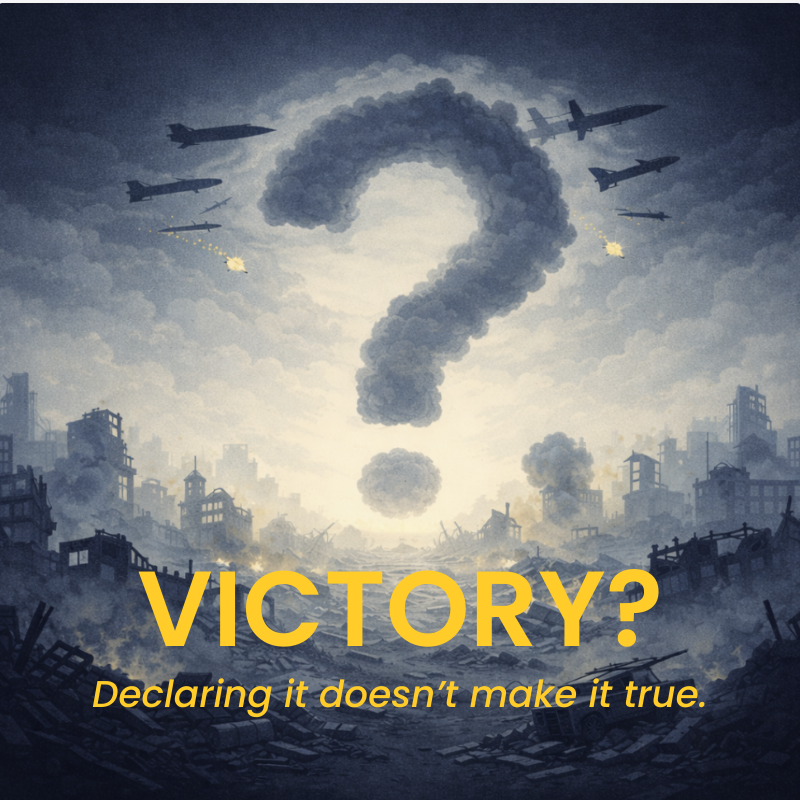
That is why the idea that victory can simply be declared, is misleading.
Political leaders may announce success once military objectives have been achieved. Strategic sites may be destroyed. An adversary’s capabilities may be degraded. These may represent real military achievements. But military success alone does not determine whether a war has truly ended. Victory, in any meaningful sense, requires a political outcome that can endure: institutions capable of governing, populations willing to accept the new political order, and a level of stability that prevents the conflict from reigniting months, years, or even a decade later.
And why the question of victory cannot be separated from the earlier questions of planning and cost.
Declaring victory, does not make it so.
The Question Citizens Must Ask
When taken together, the three dynamics examined here—language, costs, and victory—reveal why the concept of a “forever war” deserves careful attention. When the meaning of the term is vague, when the financial and human costs of conflict remain abstract, and when victory is defined narrowly in military terms, wars are far more likely to extend beyond their original scope.
Citizens evaluating decisions about war therefore face a responsibility that is both simple and profound.
Before debating whether a conflict will become a forever war, we should begin by asking a more fundamental question: What is the plan for how this conflict ends?
If leaders cannot clearly explain the political outcome they seek—and how it will realistically be achieved—then the public has a responsibility to ask harder questions.
Democratic societies grant governments the authority to wage war, but that authority must be matched by civic scrutiny about the goals, costs, and consequences of military action. Reclaiming the meaning of the phrase “forever war” is part of that civic responsibility. The term should not function as a slogan or a reflexive criticism. It should describe a very specific danger: a conflict that begins without a credible political roadmap for how it ends.
Military dominance can win battles. But without a political roadmap, it cannot prevent forever wars.
For readers who prefer a visual walkthrough of these ideas, the key arguments from this essay are also presented in a short companion series on Instagram.
Continue the Conversation
A companion Global Equity Forward visual series expands on the ideas in this essay through two Instagram carousels—one exploring the hidden costs of prolonged war and another examining the question of what it truly means to win a war.